

Renting a roll-off dumpster makes home cleanups, renovations, and large junk removal projects much easier. However, before scheduling delivery, you need to know whether the container will fit on your property.
Understanding the driveway space for dumpster rental helps you avoid delivery delays, damaged property, and unexpected placement problems.
The good news? Many residential driveways can accommodate a dumpster. The key is measuring the right areas and allowing enough room for the delivery truck.
Quick Answer: How Much Driveway Space Do You Need?
For a typical roll-off dumpster delivery, plan for approximately 60 feet of clear delivery space, at least 10.5 feet of width, and 25–30 feet of overhead clearance.
These are conservative planning figures used by major dumpster rental providers. Your actual requirements may differ depending on the truck, container size, and driveway layout.
Most standard roll-off dumpsters are approximately 8 feet wide and 10–22 feet long.
Remember, the dumpster itself takes up less room than the delivery process requires. The truck needs space to approach, unload the container, and drive away safely.
A driveway shorter than 60 feet does not automatically mean delivery is impossible. Your rental provider may be able to use an accessible approach from the street.
At a Glance: Dumpster Space Requirements
Requirement | General planning guideline |
Dumpster width | Approximately 7–8 feet |
Dumpster length | Approximately 10–22 feet |
Truck delivery access | Plan for about 60 feet of clear space |
Clear access width | At least 10.5 feet; more may help |
Overhead clearance | Plan for 25–30 feet |
Placement surface | Firm, stable, and reasonably level |
Additional space | Room for the loading door and safe access |
These are general guidelines, not guaranteed dimensions. Always confirm the requirements with your dumpster rental provider.
How Much Driveway Space Is Needed for Dumpster Delivery?
The space needed for a dumpster depends on more than the container’s dimensions.
Your driveway must accommodate the dumpster after delivery. In addition, the truck needs enough room to position the container safely.
Dumpster Footprint vs. Delivery Truck Space
The dumpster footprint refers to the area the container occupies while sitting on your driveway.
For example, a typical 20-yard roll-off dumpster may measure approximately 22 feet long and 8 feet wide.
However, the delivery truck requires more space because it must back toward the placement area and unload the container.
This creates two separate measurements:
- Placement space: Where the dumpster will remain during your rental.
- Delivery space: The clear area the truck needs to approach, unload, and leave.
A short driveway may still work when the truck can safely use the street for its approach.
Therefore, do not assume your driveway is unsuitable simply because it is shorter than the recommended delivery clearance.
Length, Width, and Overhead Clearance
Three measurements matter most when planning dumpster placement.
- Length
Measure the area where the container will sit. You should also consider the delivery path.
While many roll-off dumpsters measure approximately 10–22 feet long, the truck may need around 60 feet of clear operating space.
- Width
Most standard containers are around 8 feet wide.
However, the delivery truck needs additional side clearance. A clear approach width of at least 10.5 feet is a useful starting point.
Check whether fences, parked vehicles, walls, or landscaping make the available space narrower.
- Overhead clearance
Roll-off trucks raise their equipment when delivering and collecting containers.
For that reason, plan for approximately 25–30 feet of unobstructed height unless your rental provider specifies otherwise.
Look for trees, utility wires, roof overhangs, and other obstacles above the delivery route.
Never attempt to move or work near overhead power lines yourself.
Roll-Off Dumpster Dimensions by Size
Dumpster sizes are measured in cubic yards. This number describes how much debris the container can hold, not how much driveway space it occupies.
The following table shows common approximate dimensions.
Dumpster size | Typical length | Typical width | Common project |
10-yard | 12–15 feet | 7–8 feet | Small cleanouts |
15-yard | 10–16 feet | 7–8 feet | Garage or basement cleanup |
20-yard | 20–22 feet | 7–8 feet | Remodeling and household junk |
30-yard | 20–22 feet | 7–8 feet | Larger renovation projects |
40-yard | 20–22 feet | 7–8 feet | Major construction cleanup |
Actual measurements vary by company and container model. Some 15- or 20-yard dumpsters are shorter than these common examples.
Which Dumpster Size Fits Your Driveway?
For smaller driveways, a 10-yard dumpster may be easier to accommodate because it often has a shorter footprint.
A 15-yard container may also work when you need more capacity without choosing a full-length dumpster.
Meanwhile, 20-, 30-, and 40-yard dumpsters can have similar lengths. Their main difference may be height and capacity rather than driveway coverage.
Therefore, choosing a smaller cubic-yard capacity does not always save driveway space.
Before booking, ask for the exact length, width, and height of the container being delivered.
How to Measure Your Driveway Before Renting a Dumpster
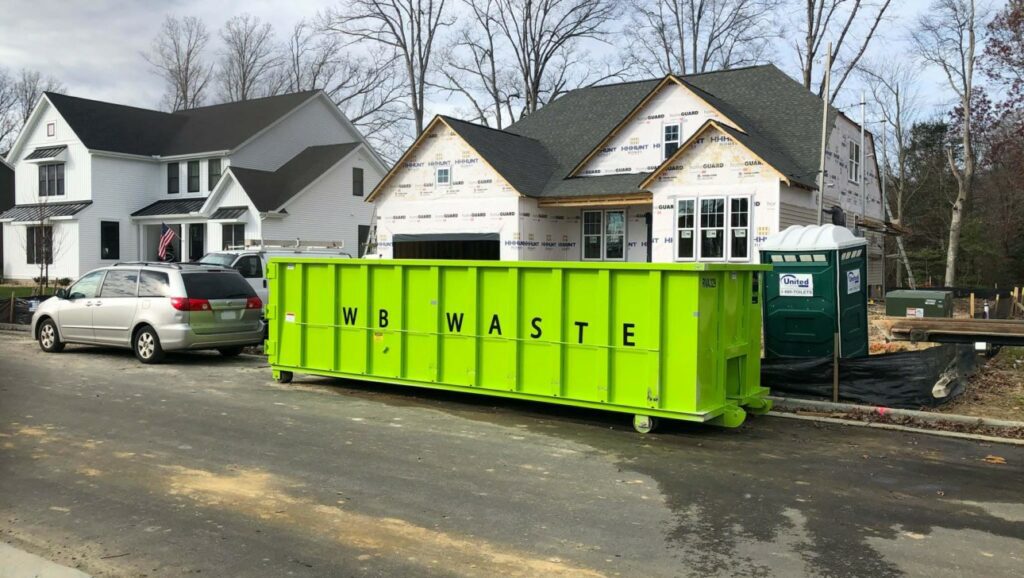
You do not need special equipment to check your driveway. A measuring tape and a few minutes of planning can help identify potential problems.
Follow these steps before scheduling your rental.
Measure the Placement Area and Truck Access
First, choose where you want the dumpster to sit.
Then measure the available length and width.
Check that the container will not block anything you still need to access, including your garage, sidewalk, or entrance.
Next, examine the route the truck will use.
Look for tight turns, gates, parked vehicles, and other obstacles.
For example, an 18-foot-wide driveway may provide plenty of room for a dumpster. However, a narrow entrance between two stone pillars could prevent the truck from reaching it.
Also, consider whether the truck can approach in a straight line.
If your driveway has an unusual layout, tell the rental provider before delivery.
Check Overhead Obstacles and Loading Door Space
After measuring the ground area, look upward.
Low tree branches, cables, utility wires, basketball hoops, and roof extensions can interfere with delivery equipment.
Make sure the entire truck approach is clear, not just the final placement spot.
Next, check where the dumpster’s loading door will open.
Many roll-off containers feature a rear swing door that makes loading furniture and bulky items easier.
Depending on the door design, you may need several additional feet behind the container.
If you plan to move heavy materials with a wheelbarrow, leave enough room to walk and turn safely.
The best placement allows you to use the dumpster comfortably without blocking the delivery truck’s return access.
Can You Rent a Dumpster for a Small or Narrow Driveway?
Yes, a dumpster can sometimes fit on a small or narrow driveway.
However, the final decision depends on the container size, truck access, and surrounding obstacles.
A small driveway does not necessarily require a small dumpster.
For instance, a shorter 20-yard container may fit a property better than a longer 15-yard model from another provider.
If you are arranging a cleanup in New York, a Long Island dumpster rental company can be a starting point for discussing local container options and property access.
The important step is confirming the actual equipment dimensions before placing your order.
Options When Your Driveway Is Too Short
If your driveway cannot accommodate a traditional roll-off delivery, consider these alternatives.
Choose a shorter container. Some rental providers offer compact dumpsters that occupy less ground space.
Consider an alternate placement area. A suitable paved parking pad or another accessible, stable surface may work.
Ask about street placement. Depending on local regulations, you may be allowed to place a dumpster on the road with the required permit.
Discuss different delivery equipment. Some providers use smaller trucks or hook-lift systems that have different access requirements.
For homeowners arranging Rochester dumpster rental services, confirming a narrow driveway or limited turning area before delivery can help prevent scheduling problems.
Never place a dumpster on a sidewalk or public road without checking the applicable rules.
How to Protect Your Driveway During Dumpster Placement
Roll-off dumpsters are heavy steel containers. Once filled with debris, they can place considerable weight on the surface underneath.
Although properly planned placement can reduce the chance of damage, no provider should promise that every driveway will remain completely unaffected.
Here are several precautions worth considering.
Use protective boards when appropriate. Plywood or sturdy wooden boards placed under designated contact points can help spread the load and reduce scratches or marks.
Check the driveway surface. Concrete, asphalt, gravel, and paving stones respond differently to heavy loads.
Avoid unstable ground. Wet soil, soft lawns, and poorly supported surfaces can sink beneath the container or delivery truck.
Tell the provider about existing damage. Cracks, loose pavers, newly installed surfaces, and drainage concerns should be discussed in advance.
Keep the dumpster on reasonably level ground. A steep slope can make delivery, loading, and pickup unsafe.
If you are booking through a Buffalo dumpster rental provider, it is worth discussing surface conditions and protective-board options before scheduling delivery.
Protective boards reduce certain risks, but they cannot guarantee protection against cracking or structural damage.
Do You Need a Permit to Place a Dumpster?
In many communities, placing a dumpster entirely on private property does not require a separate street-use permit.
However, local regulations vary.
If the container will occupy a public road, parking lane, or right-of-way, you may need permission from the city or another local authority.
Homeowners associations may also have rules about dumpster placement, rental duration, and visibility.
Before scheduling delivery, check the following:
- Whether the container will remain entirely on private property.
- Whether any part of it will block a sidewalk or public access.
- Whether your municipality requires a permit.
- Whether HOA or property management rules apply.
For example, if you are using Syracuse dumpster rental services for a residential cleanup, verify the applicable placement rules before deciding to use the street.
Checking early helps avoid delivery delays and possible fines.
Dumpster Delivery and Pickup Checklist
Once you have selected a dumpster size and placement location, a few final steps can make delivery easier.
Your Pre-Delivery Checklist
- Measure the available dumpster placement area.
- Confirm the delivery truck’s required clearance.
- Move cars, equipment, and loose objects.
- Check for overhead wires, branches, and overhangs.
- Confirm that the ground is stable and reasonably level.
- Ask whether protective boards are needed.
- Check street permits or HOA requirements, if applicable.
- Leave room for the dumpster’s loading door.
- Keep the truck’s access route clear for pickup.
On delivery day, keep children and pets away from the truck and container.
After the dumpster is placed, load materials evenly and follow the rental company’s weight and fill-line instructions.
Finally, remember that the truck needs access again when collecting the container. Do not park vehicles or leave equipment in its pickup path.
For larger renovations, construction dumpster rental on Long Island also requires careful planning around construction materials, heavy debris, and site access.
A little preparation can prevent a difficult pickup later.