
Planning a cleanup, renovation, roof job, estate cleanout, or construction project on Long Island often starts with one simple question: Do you need a permit for the dumpster?
The answer depends mostly on where the dumpster will sit. If the dumpster stays fully on your private property, such as a driveway or jobsite, you usually do not need a separate placement permit. If it goes on a street, sidewalk, curb lane, or public right-of-way, you may need approval from your town, village, county, or local highway department before delivery.
Long Island can be confusing because there is no single island-wide dumpster permit rule. Nassau County, Suffolk County, towns, villages, county roads, town roads, and private communities may all handle placement differently.
Trust Block
Trusted dumpster rental and cleanup guidance that turns confusing placement, permit, and waste removal questions into clear next steps.
Focused on helping homeowners, renters, landlords, contractors, and business owners understand permit risks early, avoid delivery delays, choose the right dumpster size, and know when it is smarter to rent a dumpster instead of relying on trash bags, curbside pickup, or repeated dump runs.
Quick Answer: Do You Need a Dumpster Permit in Long Island?
Usually, you do not need a dumpster permit if the dumpster is placed fully on private property, such as your driveway, private parking area, or active jobsite.
You may need a permit if the dumpster is placed on a public street, sidewalk, curb lane, road shoulder, or public right-of-way. Budget Dumpster gives the same general Long Island guidance: private-property placement usually does not need a permit, but street placement may require a permit from the local municipality before delivery.
The safest way to handle a dumpster permit Long Island question is to confirm the placement location before booking the delivery date.
At a Glance: Long Island Dumpster Permit Rules
Dumpster placement | Permit usually needed? | What to check |
Fully on your driveway | Usually no | Make sure the whole dumpster stays inside private property lines |
Fully on private jobsite | Usually no | Confirm with property owner, contractor, or site manager |
On a public street | Often yes | Check with town, village, highway department, or DPW |
On a sidewalk | Often yes | Pedestrian access and right-of-way rules may apply |
On a county road | May require extra approval | Nassau County says county-road work may involve both the local municipality and Nassau County DPW, and it specifically references dumpsters placed on County roads |
In a private community or HOA | Maybe | HOA or property manager rules may apply even when the town does not require a permit |
Commercial or construction site | Varies | Building permits, site rules, or hauler requirements may apply |
The key point is simple: placement controls the permit question.
The Main Rule: Private Property vs Public Right-of-Way

Most dumpster permit confusion comes from one issue: private property versus public right-of-way.
A dumpster on your own driveway is very different from a dumpster sitting in the street. Once the container uses public space, local officials may need to review safety, traffic flow, emergency access, sidewalk access, and the rental period.
National permit guides follow the same basic pattern. Dumpster Comparison explains that private property is generally permit-free, while streets, curb lanes, and public sidewalks usually put you in permit territory.
When a Driveway Dumpster Usually Does Not Need a Permit
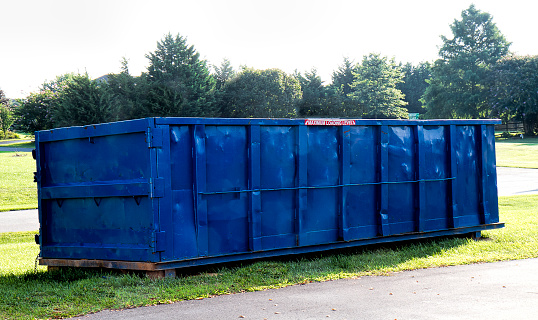
A driveway dumpster usually does not need a permit when it stays completely on your private property.
That means the container should not hang into the street. It should not block the sidewalk. It should not sit partly on a grass strip, curb area, or public right-of-way that only looks like part of your yard.
Also think about the dumpster door. If you rent a roll off dumpster with a rear-swing door, that door needs room to open without blocking a sidewalk or extending into the road.
When Street Placement May Require a Permit
Street placement is different because the dumpster is using public space.
A street dumpster can affect traffic, parking, snow removal, pedestrians, drainage, emergency vehicles, and neighbors. That is why many municipalities require a permit before a roll off container can be placed on the street.
Dumpster Champs explains the same rule in simple terms: driveway or private property is usually no permit, while public street, sidewalk, or right-of-way placement usually requires approval.
Why Long Island Dumpster Permit Rules Can Vary
Long Island is not one permit office.
A project in Hempstead may not follow the same process as a project in Huntington, North Hempstead, Brookhaven, Islip, Babylon, Smithtown, or a smaller village. Some rules may come from a town. Some may come from a village. Some may come from a highway department or county DPW.
That is why a local dumpster rental conversation should always begin with three questions:
- Where will the dumpster sit?
- What town or village is the property in?
- Is the road town-owned, village-owned, county-owned, private, or part of an HOA/community?
Nassau County Considerations
For Nassau County, be especially careful if the dumpster may sit near or on a county road.
Nassau County’s official Building and Zoning Permits page says that when considering construction on county-owned roads, people should contact both the municipality where the property lies and Nassau County DPW. The same page specifically includes “dumpsters placed on County roads” in the list of matters involving DPW contact.
That does not mean every driveway dumpster in Nassau County needs a county permit. It means road ownership matters when the dumpster touches public space.
Suffolk County and Town-Level Considerations
In Suffolk County, many permit questions are handled at the town or village level.
For example, the Town of Islip has a Solid Waste & Recyclables Services Permit Application that applies to solid waste services, including construction and demolition debris and municipally contracted services. This is different from a simple homeowner placement question, but it shows why using a qualified local hauler matters.
The hauler may need town-level authorization or permits to collect, transport, or dispose of certain materials. The customer still needs to confirm placement rules before delivery.
Town, Village, and HOA Rules
Some Long Island neighborhoods also have private rules.
A town may not require a permit for a driveway dumpster, but an HOA, condo board, apartment manager, or private community may still limit where the dumpster can sit or how long it can stay. This is common in shared parking lots, gated communities, townhome developments, and managed properties.
Before booking, ask the property manager whether dumpsters are allowed, where they can be placed, and whether a certificate of insurance or advance notice is required.
Who Is Responsible for Getting the Dumpster Permit?
Responsibility can vary.
In some places, the homeowner, renter, landlord, contractor, or property manager must apply. In other places, the dumpster rental company may handle the permit or guide the customer through the process.
The important thing is not to assume. Ask before delivery.
Use this simple script:
“Will my dumpster need a permit if it is placed at this exact location? If yes, do I apply, or does the dumpster company handle it?”
A reliable dumpster rental agency in New York should be able to explain the basic placement concern, even when the final permit decision belongs to the local municipality.
How to Check Permit Requirements Before Dumpster Delivery
Follow this process before scheduling your dumpster:
- Choose the exact placement spot.
Decide whether the dumpster will sit in the driveway, on private pavement, in a parking lot, on the street, or near a curb. - Make sure the entire dumpster fits.
Include the dumpster length, width, delivery clearance, and door swing area. - Check whether any part touches public space.
Streets, sidewalks, curb strips, road shoulders, and right-of-way areas may trigger permit rules. - Confirm the town, village, or municipality.
Long Island rules can change quickly from one local area to another. - Ask about road ownership.
County roads may involve county-level approval. Nassau County specifically advises DPW contact for dumpsters placed on County roads. - Ask about timing.
Some permits may need approval before the dumpster arrives. - Ask whether safety markers are required.
Street placement may require reflectors, cones, lights, or visible markings, depending on local rules. - Keep written confirmation.
If a permit is issued, keep a copy available during the rental period.
Common Dumpster Permit Mistakes to Avoid
The most common mistake is assuming that a dumpster is “on your property” just because it is near your home.
The area between your driveway and the street may include sidewalk, curb, utility easement, or public right-of-way. If the dumpster sits partly in that area, the permit question changes.
Another mistake is booking the dumpster before checking the placement. If the truck arrives and the driver cannot legally place the container, your project may be delayed.
Also avoid these mistakes:
- Letting the dumpster block a sidewalk.
- Placing it where it affects visibility at a corner.
- Blocking a fire hydrant or driveway.
- Keeping the dumpster longer than the allowed period.
- Assuming your contractor handled the permit without confirmation.
- Ignoring HOA or property manager rules.
- Loading prohibited materials into the container.
Permit issues are easier to solve before delivery than after the dumpster is already on-site.
When Renting a Dumpster Makes More Sense Than Other Disposal Options
A dumpster is usually the right choice when the cleanup is too large for regular trash pickup.
It can make sense for:
- Garage cleanouts
- Estate cleanouts
- Basement cleanouts
- Attic cleanouts
- Kitchen or bathroom renovations
- Roofing debris
- Deck removal
- Yard cleanup
- Tenant cleanouts
- Light construction debris
- Office or retail cleanouts
Trash bags work for small household waste. Curbside pickup may work for limited items. Dump runs may work if you have a truck, time, help, and a nearby approved disposal facility.
But when debris piles up fast, a dumpster can save time, reduce repeated hauling, keep the worksite cleaner, and make the project safer. The same placement-first planning also applies when comparing waste removal services across different New York markets.