
Cleaning out your garage, remodeling a kitchen, or clearing a property can leave you with more waste than your regular trash service can handle. Before renting a dumpster, you need to know which materials are accepted and which require special disposal.
Understanding dumpster waste types helps you choose the right container, avoid unwanted fees, and keep your cleanup moving.
However, not everything can go into the same dumpster. Household clutter, construction materials, landscaping debris, and commercial trash may follow different disposal rules.
This guide explains what you can usually throw away, what needs approval, and how to plan a safer, more cost-effective cleanup.
By Ryan Carter | Dumpster Rental and Waste Cleanup Advisor
Quick Answer: What Types of Waste Can Go in a Dumpster?
Most rental dumpsters accept common household junk, non-hazardous construction debris, and certain yard materials. Temporary commercial cleanout waste may also be accepted, depending on the container and disposal facility.
However, hazardous materials, chemicals, batteries, liquids, and other restricted items generally need separate handling.
The four main categories are:
- Household waste: Furniture, clutter, clothing, carpeting, and common cleanout debris.
- Construction debris: Drywall, lumber, flooring, cabinets, and many demolition materials.
- Yard waste: Branches, leaves, grass clippings, and landscaping debris where permitted.
- Commercial waste: Office furniture, packaging, store fixtures, and other non-hazardous business cleanout materials.
Always confirm acceptance rules with your rental provider before loading the container.
Dumpster Waste Types at a Glance
Waste Type | Common Examples | Important Restrictions |
Household waste | Furniture, toys, clothing, carpeting | Appliances and mattresses may need approval |
Construction debris | Drywall, lumber, flooring, roofing materials | Heavy debris may require a dedicated container |
Yard waste | Grass, leaves, shrubs, branches | Stumps, soil, and mixed loads may be restricted |
Commercial waste | Office furniture, cardboard, fixtures | Hazardous, medical, and certain industrial waste need special handling |
Important: These are general categories, not a universal acceptance list. Local landfill rules and individual rental agreements determine what can go into your dumpster.
What Are the Main Dumpster Waste Types?
Dumpster waste generally falls into four categories: household, construction, yard, and commercial debris.
Each category comes from a different type of activity. For example, clearing an attic produces household junk, while replacing a bathroom creates construction debris.
That difference matters because dumpster providers may use separate disposal facilities, pricing rules, and weight allowances.
For a Long Island home cleanout, understanding dumpster waste types helps you describe the materials before choosing a container.
The first step is simple: identify what you are throwing away before estimating how much space you need.
What Household Waste Can Go in a Dumpster?
Most non-hazardous household junk can go into a residential roll-off dumpster, subject to local restrictions.
A dumpster can be useful when you’re clearing a basement, emptying a rental property, replacing old furniture, or preparing a home for renovation.
Instead of filling dozens of trash bags or making repeated trips to a disposal facility, you can collect approved items in one container.
Common Household Junk and Furniture
Household dumpster rentals commonly accept:
- Wooden tables, chairs, and bookcases
- Dressers and bed frames
- Clothing, toys, and general clutter
- Carpeting and carpet padding
- Non-hazardous household decorations
- Empty boxes and unwanted packaging
- Broken shelving and cabinets
- Other approved bulky household items
For example, clearing a garage may leave you with old shelving, damaged furniture, boxes, and unused household goods. A roll-off dumpster can help remove these materials as one cleanup project.
For larger home cleanouts in Rochester, a roll-off dumpster rental may be more practical than relying entirely on regular curbside collection.
However, usable furniture and clean household goods may be suitable for donation. Consider separating them before loading the dumpster.
Appliances, Mattresses, and Items That Need Approval
Not every household item is treated the same way.
Mattresses, upholstered furniture, televisions, and appliances may be restricted or subject to additional disposal charges.
For example:
- Mattresses: Some facilities accept them but charge separate processing fees.
- Refrigerators and freezers: Refrigerants require proper handling.
- Air conditioners: May need professional refrigerant recovery before disposal.
- Televisions and computers: Often require electronics recycling.
- Washing machines and dryers: May be accepted, but confirm first.
Never assume that an item is approved simply because it fits inside the container.
Before loading: Make a short list of bulky items and ask the dumpster provider whether each one is accepted.
What Construction and Demolition Debris Can You Throw Away?
Construction and demolition debris includes materials removed or discarded during building, remodeling, repairing, and demolition projects.
Many non-hazardous construction materials are suitable for roll-off dumpsters. However, some materials are much heavier than ordinary household junk and may require a separate container.
Common Remodeling and Building Materials
A construction dumpster may accept:
- Drywall and sheetrock
- Untreated lumber and wood scraps
- Old kitchen cabinets
- Flooring and carpet
- Doors and trim
- Non-asbestos insulation
- Siding
- Ceramic tiles
- Bathroom fixtures
- Metal scraps
- Approved roofing materials
Imagine replacing an outdated kitchen. Removing cabinets, flooring, countertops, and drywall can create a large pile of waste before the new kitchen is installed.
Rather than letting debris collect around your home, a properly placed dumpster gives workers a designated area for approved materials.
For substantial remodeling projects, a construction dumpster rental helps you plan around debris volume, material weight, and scheduled removal.
Concrete, Brick, Roofing, and Other Heavy Debris
Heavy materials require additional planning.
Concrete, brick, asphalt, dirt, stone, and roofing shingles can use up a dumpster’s weight allowance quickly.
A container may look only half full yet already be near its permitted weight.
Common heavy materials include:
- Broken concrete
- Bricks and masonry
- Asphalt
- Roofing shingles
- Ceramic and stone tiles
- Soil and gravel
Some providers offer smaller, dedicated heavy-debris dumpsters. Others restrict how high you can load these materials.
Important: Do not mix concrete, dirt, or masonry with ordinary trash unless the provider specifically approves that combination.
If you’re replacing a driveway or removing a concrete patio, tell the rental company what material you have and roughly how much you expect to remove.
A dedicated heavy-material container may be a better choice than a larger mixed-waste dumpster.
Also, if you suspect asbestos or another hazardous building material, stop work on the affected material and arrange appropriate professional evaluation and handling.
Can You Put Yard Waste and Landscaping Debris in a Dumpster?
Yard waste is often accepted in rental dumpsters, but local disposal rules can vary considerably.
Some services allow landscaping materials with general waste. Others require a separate yard-debris container so organic materials can be processed differently.
Grass, Leaves, Branches, and Shrubs
Common landscaping debris includes:
- Grass clippings
- Fallen leaves
- Small tree branches
- Shrubs and bushes
- Garden trimmings
- Weeds
- Non-hazardous plant debris
For example, trimming several trees or clearing an overgrown backyard may produce more material than regular yard-waste collection can handle.
In those situations, a dumpster may simplify the cleanup.
For extensive seasonal landscaping projects in Buffalo, dumpster rental services can be considered alongside municipal yard-waste collection.
First, check whether your local service accepts branches, grass, and other organic material in the same container.
Tree Stumps, Soil, and Mixed Yard Waste
Tree stumps, roots, sod, and soil often have different restrictions from ordinary leaves and branches.
Large stumps may exceed size limits or require special handling. Meanwhile, soil and rocks are heavy enough to create weight-related problems.
Before renting, ask:
- Are tree stumps accepted?
- Is there a maximum branch diameter?
- Can leaves and branches be mixed with household junk?
- Are soil, sod, or rocks permitted?
- Does the provider require a clean yard-waste load?
Practical tip: Keep landscaping chemicals, pesticides, and other hazardous products separate from ordinary yard debris.
What Types of Commercial Waste Can Go in a Dumpster?
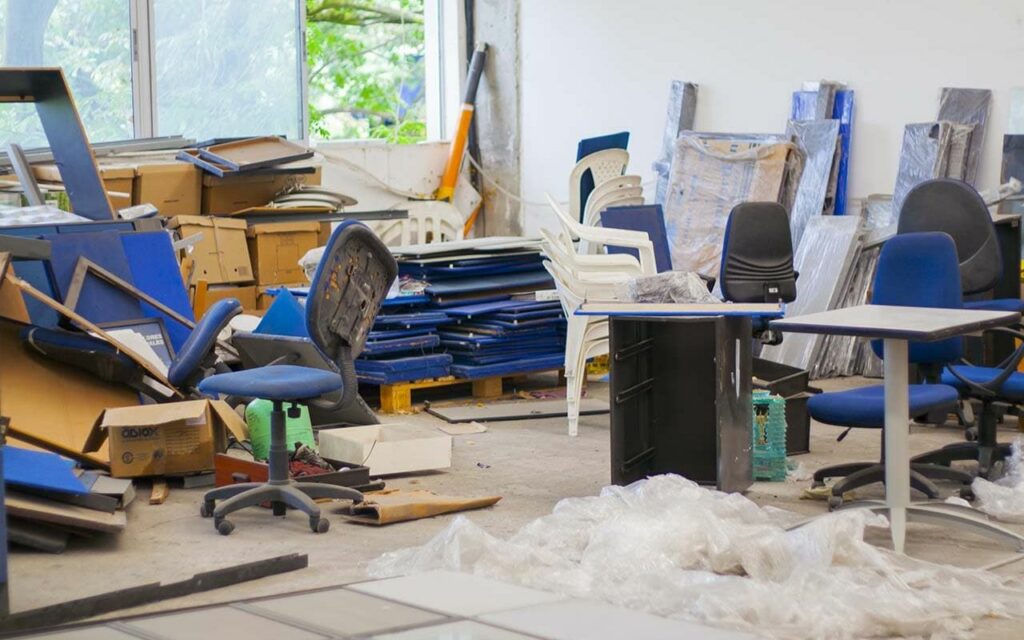
Commercial waste includes materials generated by offices, stores, restaurants, warehouses, and other business operations.
However, a temporary roll-off dumpster is different from the permanent commercial trash container used for regular collection.
The right option depends on whether you need ongoing waste collection or a one-time cleanup.
Office, Retail, and Business Cleanout Waste
Temporary commercial cleanout dumpsters may accept non-hazardous items such as:
- Office desks and chairs
- Filing cabinets
- Store fixtures
- Shelving
- Cardboard packaging
- Non-hazardous warehouse debris
- Old carpeting
- Approved furniture
- General office cleanout materials
For example, a business relocating to a new office may need to remove old desks, damaged shelving, carpeting, and unwanted fixtures.
A temporary roll-off container can help organize that cleanup.
However, electronics, confidential records, chemicals, and certain industrial materials may require separate disposal or recycling services.
Commercial Trash Dumpsters vs. Temporary Roll-Off Dumpsters
A permanent commercial dumpster is typically used for regular trash collection.
A temporary roll-off dumpster is generally delivered for a particular cleanup project and collected when the work is complete or the rental period ends.
Container Type | Best For |
Commercial trash dumpster | Ongoing business waste and scheduled collection |
Temporary roll-off dumpster | Office cleanouts, renovation debris, and large one-time projects |
Regular commercial dumpsters may not accept construction materials, bulky furniture, or heavy debris.
For a major business cleanout in Syracuse, a commercial dumpster rental may offer a more suitable temporary disposal option than the property’s regular trash container.
Before booking, explain whether your project involves ordinary business trash, renovation debris, or a combination of materials.
Which Items Are Prohibited or Require Special Disposal?
Certain waste materials should not go into an ordinary rental dumpster because they create safety risks, environmental concerns, or disposal problems.
The U.S. Environmental Protection Agency identifies some paints, cleaners, oils, batteries, and pesticides as household hazardous waste because they can be toxic, corrosive, ignitable, or reactive.
These products may require collection through approved recycling or hazardous-waste programs.
Source: U.S. EPA — Household Hazardous Waste
Hazardous Waste and Unsafe Materials
Common materials that generally require special disposal include:
- Gasoline and other fuels
- Motor oil and automotive fluids
- Paint thinner and solvents
- Liquid paint
- Pesticides and certain chemicals
- Batteries
- Propane tanks
- Pressurized cylinders
- Asbestos-containing materials
- Medical or infectious waste
- Other flammable or toxic substances
Do not hide restricted materials inside bags or underneath ordinary debris.
Improper disposal can create hazards for drivers, waste handlers, and processing facilities.
Instead, contact your local waste authority or an approved collection facility.
The EPA recommends using community household hazardous waste programs where available rather than pouring harmful products onto the ground, into drains, or into storm sewers.
Items That May Need Extra Fees or Special Handling
Some materials are not universally prohibited but still need advance approval.
Examples include:
Item | Why You Should Check |
Mattresses | Special processing or per-item fees |
Upholstered furniture | Facility-specific acceptance rules |
Refrigerators | Refrigerant management requirements |
Air conditioners | Refrigerant handling |
Electronics | E-waste recycling restrictions |
Tires | Separate recycling or disposal requirements |
Large tree stumps | Size, handling, or weight limits |
Concrete and soil | Dedicated heavy-debris container requirements |
For these items, ask whether the provider accepts them, charges separately, or recommends a different disposal method.
A quick confirmation before loading can prevent an avoidable pickup problem.
Can You Mix Different Waste Types in One Dumpster?
Some dumpsters are designed for mixed, non-hazardous debris. However, not every waste category can be combined.
For example, a home renovation may produce household clutter, broken cabinets, wood scraps, and drywall.
A provider may accept those materials together in a mixed-waste dumpster.
On the other hand, concrete, soil, hazardous materials, and recyclable yard debris may need separate handling.
Use this approach before loading:
- Separate hazardous materials. Do not place them in the rental dumpster.
- Identify heavy debris. Ask whether concrete, brick, or soil needs a dedicated container.
- Check bulky items. Confirm rules for mattresses, furniture, and appliances.
- Keep recyclables separate where practical. Clean cardboard, metal, and other materials may have recycling options.
- Confirm mixed-load acceptance. Tell the rental provider exactly what you plan to throw away.
If your project produces several waste categories, sorting materials before delivery can make loading easier.
It can also help you avoid mixing items that should go to different disposal facilities.
How Do Waste Types Affect Dumpster Size and Rental Cost?
Dumpster size matters, but the type and weight of your debris can matter just as much.
A large pile of lightweight furniture may occupy more space than a small amount of concrete. Yet the concrete could weigh considerably more.
That is why choosing a dumpster based only on how full it looks can lead to mistakes.
Common rental container sizes include:
Dumpster Size | Typical Project Examples |
10-yard | Small cleanouts and limited renovation debris |
15-yard | Medium cleanouts and remodeling projects |
20-yard | Larger household cleanouts and kitchen renovations |
30-yard | Extensive renovations and property cleanouts |
40-yard | Large-volume construction or commercial cleanouts |
These are general project examples, not guaranteed capacities or weight allowances. Available sizes and permitted materials vary by rental provider.
Several factors can affect your final cost:
- Dumpster size
- Type of debris
- Total disposal weight
- Rental duration
- Delivery location
- Extra pickup or exchange requests
- Special-item disposal fees
- Local landfill charges
For example, an overloaded dumpster or one containing prohibited materials may lead to extra charges or a delayed pickup.
Before accepting a quote, ask what weight is included and how overage fees are calculated.
Also, confirm whether the quoted rate includes delivery, pickup, disposal, and applicable charges.
When Should You Rent a Dumpster Instead of Using Curbside Pickup?
Not every cleanup requires a rental dumpster.
If you are throwing away a few ordinary trash bags, your regular waste collection service may be enough.
However, a dumpster becomes more useful when debris is bulky, spread across several rooms, or generated over multiple days.
Consider renting one when:
- You are cleaning out an entire house.
- Your garage or basement contains years of clutter.
- You are replacing flooring or cabinets.
- A remodeling project will produce continuous debris.
- You are clearing an estate or rental property.
- You need to remove large volumes of approved landscaping waste.
- Multiple dump trips would interrupt your cleanup.
For small quantities of recyclable or reusable items, donation centers, recycling facilities, and municipal collection programs may be better choices.
A useful rule: If your approved debris will not fit safely into regular collection and repeated hauling would be inconvenient, a temporary dumpster may be worth considering.
However, if the main materials are hazardous or require specialist recycling, an ordinary rental dumpster is not the right disposal solution.
What Should You Check Before Booking a Dumpster?
Before scheduling delivery, take a few minutes to review your project.
This makes it easier to choose an appropriate container and understand the rental terms.
Dumpster rental preparation checklist
- Identify your main waste category.
- List any unusual or bulky items.
- Estimate the amount of debris.
- Identify concrete, soil, roofing, or other heavy materials.
- Separate prohibited and hazardous waste.
- Ask which materials can be mixed.
- Confirm dumpster size and included weight.
- Ask about additional disposal or overage fees.
- Choose a safe, accessible placement location.
- Check whether street placement requires permission.
- Confirm the rental period and pickup arrangements.
When possible, choose a firm, level location with enough space for the delivery truck.
Keep the container away from blocked entrances, overhead obstacles, and areas that cannot safely support its weight.
Finally, load approved debris evenly and keep everything below the permitted fill level. Overfilled containers may be unsafe to transport.