

Pulling up old flooring can leave you with a bigger cleanup than expected.
Carpet becomes bulky once it is rolled. Hardwood planks take up space fast. Tile may not look like much in the dumpster, but the weight of the tile, mortar, and backer board can add up quickly.
For many residential projects, a 10- or 20-yard flooring removal dumpster is a practical starting point. However, the right size depends on what type of flooring you are removing, how many square feet are coming out, and whether you are also removing padding, underlayment, or subflooring.
The goal is not simply to rent the biggest dumpster available. It is to choose a container that gives you enough space without creating unnecessary cost or weight problems.
Quick Answer: What Size Dumpster Do You Need for Flooring Removal?
For one or two rooms of carpet, laminate, vinyl, or hardwood, a 10-yard dumpster may be enough.
For several rooms or a typical whole-house flooring project, a 15- or 20-yard dumpster is often a better starting point.
Large flooring projects, mixed renovation debris, or whole-home removals may require a 20- or 30-yard dumpster.
Tile and stone need extra attention. These materials are heavy, especially when mortar, thinset, cement board, or other material underneath the flooring is removed too. In these cases, the dumpster’s weight allowance may matter more than its physical size.
Flooring Removal Dumpster Sizes at a Glance
Flooring Project | Practical Starting Point | Main Concern |
One small room | 10-yard | Total volume |
1–2 rooms of carpet | 10-yard | Bulky carpet and padding |
Several rooms | 10–20-yard | Material type |
Kitchen or bathroom tile | 10-yard or provider-recommended heavy-debris option | Weight |
Whole-house carpet | 15–20-yard | Volume |
Whole-house hardwood | 20-yard or larger | Weight and volume |
Whole-house mixed flooring | 20–30-yard | Mixed debris |
Large tile or stone project | Ask before booking | Weight allowance |
These are planning ranges rather than hard rules. Dumpster dimensions, allowed materials, and included weight vary by company, so describe the flooring you are removing before placing an order.
What Size Dumpster Is Best for Flooring Removal?
The easiest way to narrow down your size is to look at the scale of the project first.
10-Yard Dumpster
A 10-yard dumpster is a good starting point for smaller flooring projects.
It can make sense for:
- a bedroom
- a small living room
- one or two rooms of carpet
- a small amount of vinyl or laminate
- a bathroom flooring project
- a small kitchen floor
- flooring combined with a limited amount of light remodeling debris
A smaller dumpster can also be easier to place in a residential driveway.
However, small does not mean unlimited. Heavy tile can reach a container’s allowable weight while plenty of physical space remains.
15- or 20-Yard Dumpster
This range works well for many medium and larger residential flooring jobs.
Consider it for:
- several rooms
- an entire level of a home
- whole-house carpet removal
- larger laminate or vinyl projects
- hardwood flooring removal
- mixed flooring
- flooring plus trim, padding, or other renovation debris
If your project looks too large for a 10-yard container but does not involve a major demolition, a 20-yard dumpster is often a useful middle ground.
Before booking, tell the dumpster rental agency whether you have carpet, hardwood, tile, stone, or mixed materials. The same amount of floor space can create very different disposal needs.
30-Yard Dumpster
A 30-yard dumpster becomes more useful when flooring removal is part of a larger renovation.
For example, you may also be removing:
- cabinets
- drywall
- trim
- doors
- old fixtures
- wood
- packaging
- other bulky construction debris
However, do not automatically order a larger dumpster because you have heavy tile.
A larger container provides more cubic-yard capacity, but the truck still has a safe hauling limit. For dense debris, the rental provider may recommend a smaller heavy-material container, multiple loads, or another disposal plan.
Choose a Dumpster Based on the Flooring You Are Removing
Flooring materials behave very differently once you start tearing them out.
That is why square footage alone is not enough.
Carpet and Padding Removal
Carpet is relatively light, but it becomes bulky.
Once you cut, roll, and remove carpet from several rooms, the rolls can consume a surprising amount of dumpster space. Padding adds even more volume.
A 10-yard dumpster may work well for one or two rooms. Larger carpet projects commonly call for more space.
To use the container efficiently:
- cut carpet into manageable strips
- roll the strips tightly
- secure rolls if necessary
- separate padding as you remove it
- keep tack strips and sharp pieces contained
Do not simply throw loose carpet into the dumpster. Loose material creates empty pockets and wastes usable space.
Tile and Stone Removal
Tile is different.
The biggest problem is usually weight, not volume.
Ceramic and porcelain tile are dense. In addition, the material underneath the tile may come up during demolition.
That can include:
- thinset
- mortar
- cement backer board
- grout
- additional flooring layers
As a result, a dumpster can appear far from full even though the load is already approaching its allowed weight.
For a tile project, tell your rental provider exactly what you are removing. Do not assume that moving from a 10-yard dumpster to a 30-yard dumpster automatically solves the problem.
Hardwood Flooring Removal
Hardwood sits between carpet and tile.
It is heavier than carpet and can also take up plenty of space because the boards do not always stack neatly after demolition.
The amount of waste changes depending on whether you are removing:
- engineered hardwood
- solid hardwood
- glue-down flooring
- nailed flooring
- damaged subflooring
Small hardwood jobs may fit a 10-yard container. Larger projects often move into the 15- or 20-yard range.
Whole-house removal deserves a more careful weight estimate, especially when the subfloor is coming out too.
Vinyl and Laminate Flooring Removal
Vinyl, luxury vinyl plank, and laminate are generally easier to manage than heavy tile.
They are usually more of a space problem than a serious heavy-debris problem.
For small projects, a 10-yard dumpster may provide plenty of capacity. A larger multi-room or whole-house project may call for a 15- or 20-yard container.
Stack planks as flat as practical. Doing so reduces wasted space and makes loading safer.
Why Flooring Weight Matters as Much as Dumpster Size
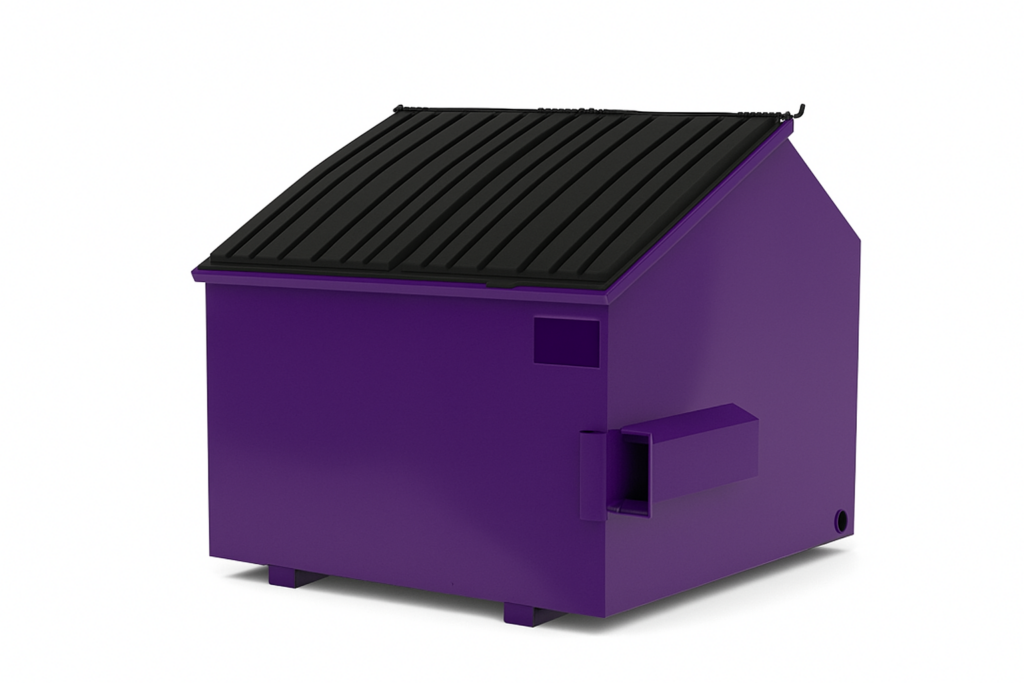
One of the easiest mistakes is looking only at cubic yards.
A dumpster has both:
- space capacity
- allowable weight
You can hit either limit first.
Light but Bulky Flooring
Carpet and padding are good examples.
They can fill the container before weight becomes the main concern.
Therefore, efficient loading matters. Cutting and rolling carpet can help you use the available space.
Heavy Flooring Debris
Tile, stone, mortar, and certain underlayment materials present the opposite problem.
They take up less space but can be surprisingly heavy.
A container that looks half empty is not necessarily under its weight limit.
This is why reputable dumpster rental services will normally want to know what type of debris you plan to load instead of recommending a dumpster based only on the size of your house.
How to Estimate Your Flooring Removal Dumpster Size
You do not need a perfect debris calculation.
You do need four pieces of information.
Measure the Square Footage
Start with the floor area being removed.
For a rectangular room:
Length × width = square footage
A 12-foot by 15-foot room, for example, has 180 square feet of flooring.
For several rooms, calculate each room and add the figures together.
Check for Multiple Flooring Layers
Older or remodeled homes sometimes have one floor installed over another.
You might discover:
- vinyl under laminate
- tile over older tile
- hardwood over another material
- extra plywood
- old adhesive
- hidden underlayment
More layers mean more debris.
Do not finalize the dumpster size until you have a reasonable idea of what is underneath the visible flooring.
Decide Whether the Subfloor Is Coming Out
Replacing only the finish flooring produces far less debris than tearing everything down to the joists or slab.
Subflooring can add both weight and volume.
If you discover damaged plywood, OSB, cement board, or another substrate that must also be removed, tell the dumpster company before loading begins.
Include Other Renovation Debris
Floor replacement rarely happens in complete isolation.
You may also be removing:
- baseboards
- trim
- cabinets
- drywall
- doors
- damaged furniture
- fixtures
- packaging
A container that is perfect for the flooring alone may be too small once the rest of the remodeling waste is added.
If flooring removal is part of a larger remodel, a construction dumpster rental may give you enough capacity for the wider cleanup.
What Can Make You Need a Larger Dumpster?
Consider sizing up when:
- you are removing flooring from several rooms
- the entire house is being remodeled
- the subfloor is also being removed
- there are several flooring layers
- carpet and padding take up significant space
- other renovation waste is being added
- damaged material is difficult to compact or stack
However, remember that sizing up does not automatically solve a heavy-debris problem.
For tile, stone, mortar, and similar material, confirm the allowable weight first.
How to Load Flooring Debris Efficiently
Good loading can make a noticeable difference.
Start by keeping the debris as compact as possible.
For carpet, cut it into manageable strips and roll each strip tightly.
For laminate, vinyl planks, and hardwood, stack pieces flat where practical instead of dropping them randomly.
Spread heavier flooring debris evenly across the bottom rather than creating one dense pile at one end.
Keep debris below the container’s fill line. Material sticking above the top can create transportation problems and may prevent pickup.
Finally, keep the area around the dumpster clear. A cleaner loading area reduces tripping hazards and gives you room to move debris safely.
Flooring Removal Mistakes That Can Cost You More
Choosing by Square Footage Alone
Five hundred square feet of carpet is not the same disposal job as 500 square feet of tile.
Always consider the material.
Ignoring the Material Under the Floor
Thinset, mortar, backer board, padding, and subflooring all become part of the waste stream when they are removed.
Automatically Renting the Biggest Container
More space does not necessarily mean more allowable weight.
This mistake is especially important with tile and stone.
Mixing Extra Debris Without Checking
You may start with flooring and later decide to throw in cabinets, drywall, furniture, or yard waste.
Before doing that, confirm that those materials are accepted.
Filling Above the Dumpster
Never plan around creating a mound above the top of the container.
A dumpster normally must be safe to cover and transport before it can be hauled away.
Can All Flooring Go in a Dumpster?
Many common flooring materials can be accepted by dumpster companies, including carpet, padding, laminate, vinyl, wood, and certain tile debris.
However, acceptance rules vary.
Older flooring deserves extra caution.
You cannot reliably determine whether suspect flooring contains asbestos simply by looking at it. If old flooring or adhesive may contain asbestos and your renovation will disturb it, testing by an appropriately qualified professional may be needed before removal.
Do not place suspected asbestos or another hazardous material into a regular dumpster unless the rental company and applicable disposal rules specifically allow it.
The same principle applies to other restricted materials. Ask before loading anything you are unsure about.
When Renting a Dumpster Makes More Sense Than Trash Bags or Dump Runs
Trash bags can work when you are replacing flooring in a tiny area.
Once several rooms are involved, they quickly become inconvenient.
A dumpster begins to make more sense when:
- debris is too bulky for household trash
- the project lasts several days
- you would otherwise make repeated landfill trips
- sharp flooring debris is accumulating around the house
- contractors need one central disposal location
- carpet rolls and flooring planks are taking over the driveway or garage
Repeated dump runs also mean repeatedly loading and unloading the same debris.
With an on-site dumpster, flooring can usually go directly from the room to the container.
That keeps the work area cleaner and makes it easier to move on to the new floor.
How to Choose the Right Dumpster Before You Book
Before calling a flooring removal dumpster provider, write down five things:
- Flooring type — carpet, hardwood, tile, vinyl, laminate, or mixed
- Approximate square footage
- Number of flooring layers
- Whether underlayment or subfloor is being removed
- Whether other remodeling debris will go in the dumpster
Then ask the provider:
- Which dumpster size fits this material?
- How much weight is included?
- Are there special rules for tile or stone?
- Can different flooring materials be mixed?
- Are there prohibited materials?
- How long is the rental period?
- What happens if the load exceeds the included weight?
A few minutes spent answering those questions can prevent an undersized dumpster, an unnecessary second rental, or avoidable disposal charges.