

Moving is much easier when you are not packing things you no longer want. A moving dumpster rental gives you one convenient place for broken furniture, damaged household items, old storage clutter, and other waste that should not follow you to your new home.
Instead of filling your garage with trash bags or stopping your packing to make repeated dump runs, you can clear each room and keep moving forward.
Planning a move and unsure what size container you need? Describe the home, the items you are removing, and your cleanup schedule before requesting a quote. A rental provider can then recommend a practical size and explain local disposal restrictions.
Quick Answer: Does Renting a Dumpster Before Moving Save Time?
Yes. A moving dumpster rental can save time by giving you one on-site place for unwanted household junk. You can declutter while you pack, avoid repeated landfill trips, reduce the number of items being moved, and have the remaining waste removed in one scheduled pickup.
This works best when you have more debris than regular curbside service can reasonably handle and enough time to load the container before moving day.
At a Glance: When a Moving Dumpster Makes Sense
Question | Practical answer |
When should you consider one? | When you have bulky furniture, broken items, several rooms to clear, or more waste than curbside pickup will accept |
When should it arrive? | Before serious packing begins, not after the moving truck arrives |
What sizes are common? | Smaller containers may suit an apartment or one-room cleanout; larger containers are often better for multi-room or whole-home cleanouts |
What affects the price? | Size, location, rental length, included weight, material type, and possible permit or overage charges |
What cannot go inside? | Paint, chemicals, batteries, propane tanks, tires, refrigerant-containing appliances, and other restricted materials may need separate disposal |
When is it unnecessary? | When the waste fits into a few regular trash bags or you cannot safely place and load a container |
Why Renting a Dumpster Before Moving Saves Time
The biggest benefit is not simply having a large container. It is being able to keep the cleanup moving without stopping every few hours to solve another disposal problem.
You Can Declutter Without Interrupting Your Packing
Without a dumpster, unwanted items often move from one temporary pile to another:
- Bedroom to hallway
- Hallway to garage
- Garage to vehicle
- Vehicle to landfill
Each transfer takes time and creates more work.
With an on-site container, you make one decision and handle the item once. Keep it, donate it, sell it, recycle it, or discard it. Items going into the dumpster can leave the room immediately.
That helps prevent trash bags, broken shelves, old boxes, and unwanted furniture from blocking the areas where you are trying to pack.
You Avoid Repeated Trips to the Dump
Self-hauling may sound inexpensive until you count the full process:
- Sort the waste.
- Load your vehicle.
- Secure the load.
- Drive to the disposal facility.
- Wait to unload.
- Pay any disposal charge.
- Drive home.
- Repeat the process.
A dumpster lets you combine those separate trips into one pickup by the rental provider. Competitor guides repeatedly identify avoided landfill trips as one of the main time-saving benefits.
You Pack, Move, and Unpack Fewer Items
Moving an unwanted item creates work at least three times:
- You pack or prepare it.
- You load and transport it.
- You unload and find space for it.
You may also pay movers to handle it or choose a larger truck because of it.
Decluttering first reduces the number of boxes and bulky items that reach the moving truck. It can also make the new home easier to organize because you are not filling it with belongings you already planned to discard.
You Create a Safer, More Organized Work Area
Moving becomes harder when hallways, stairs, garages, and doorways are crowded.
A central disposal point helps remove:
- Broken chairs
- Damaged shelving
- Loose scrap
- Old rugs
- Empty containers
- Unusable decorations
- Worn household goods
Removing these items can give movers and family members a clearer path through the home. It also reduces the chance of sharp or unstable objects being left in active work areas.
When Is a Moving Dumpster Rental Worth It?
A dumpster is not required for every move. It becomes valuable when the amount or type of waste is too difficult to handle through ordinary trash service.
Good Situations for a Dumpster
Consider renting one when:
- You are clearing several rooms.
- You are moving after living in the home for many years.
- You are downsizing to a smaller property.
- You have broken or unusable furniture.
- Your garage, attic, basement, or shed contains accumulated junk.
- Your local trash service limits bulky items.
- You would otherwise need several landfill trips.
- You want to clean while packing over several days.
- You are preparing a rental property for a final inspection.
- You need the old home empty before a firm closing date.
A residential dumpster rental is especially useful when the cleanup is too large for regular trash bins but can still be completed by the household without a full junk-removal crew.
When Another Disposal Option May Be Better
Choose another option when:
- The waste fits into a few trash bags.
- You only have one or two bulky items.
- You cannot safely lift or load the items.
- The move is happening within the next day or two.
- Most belongings are still usable and should be donated.
- Your property has no legal or accessible placement area.
- Most of the waste is hazardous or restricted.
A junk-removal crew may be better when speed and labor are more important than cost per unit of space. Donation pickup may be better when the items are usable. Regular curbside service may be enough for a very small cleanup.
What Should You Remove Before Packing?
Do not begin by throwing everything away. A simple sorting system protects valuable items and prevents usable goods from taking up dumpster space.
Keep
Keep items that:
- You use regularly
- Fit the new home
- Would be costly or difficult to replace
- Have a clear purpose
- Carry genuine personal value
Place these directly into labeled moving boxes whenever possible.
Sell or Donate
Sell or donate items that are still safe and usable, such as:
- Furniture in good condition
- Working appliances
- Clean clothing
- Kitchenware
- Books
- Tools
- Toys
- Home décor
- Sports equipment
Schedule donation pickups early. Charities may have limited availability, and some do not accept damaged, oversized, or heavily worn items.
Recycle Separately
Some communities provide separate programs for:
- Electronics
- Scrap metal
- Cardboard
- Documents requiring shredding
- Certain appliances
- Rechargeable batteries
Keep these materials out of the general waste pile until you confirm the correct disposal method.
Discard
The dumpster pile may include:
- Broken furniture
- Damaged storage containers
- Worn carpets
- Unusable household goods
- Broken toys
- Ruined clothing
- Non-recyclable packing waste
- Old decorations
- General household junk
Acceptance depends on the provider and local disposal rules. Ask before loading anything unusual.
What Size Dumpster Do You Need Before Moving?
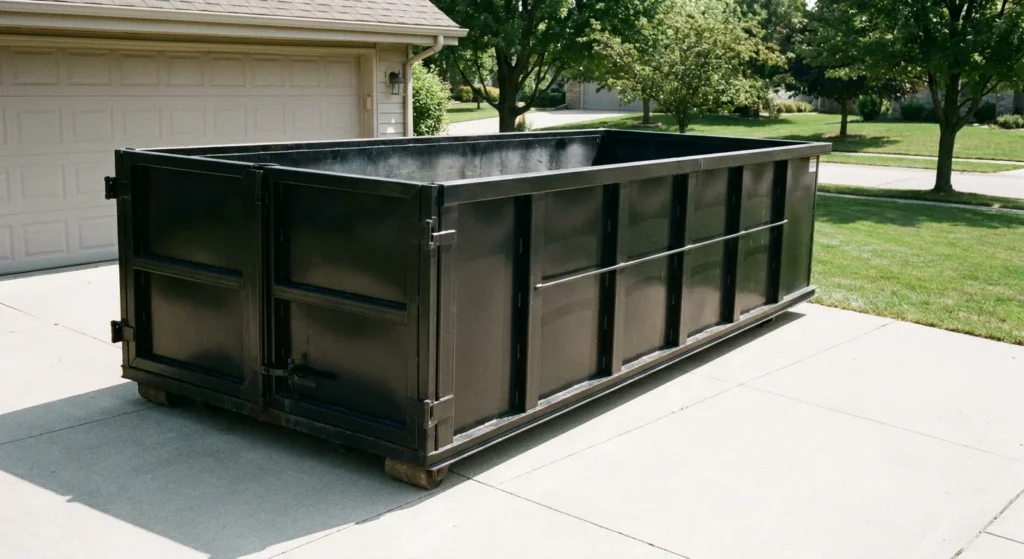
There is no universal size based only on the number of bedrooms. Two homes of the same size can produce very different amounts of waste.
One family may be moving nearly everything. Another may be clearing a basement, garage, attic, and several rooms before downsizing.
10-Yard Dumpster
A smaller dumpster may work for:
- An apartment cleanout
- One room
- A small garage
- A limited furniture purge
- Several bulky household items
A 10-yard container is commonly compared with roughly three pickup-truck loads, although actual dimensions and weight allowances vary by provider.
15- or 20-Yard Dumpster
A mid-sized container may work for:
- Several rooms
- A larger apartment
- A small or medium home
- Downsizing
- Furniture plus general household junk
- Combined garage and basement cleanup
Moving-focused guides commonly identify 10- and 20-yard containers as practical options for residential moves, while some providers recommend a 15-yard container for an established household cleanout.
How to Estimate Your Required Space
Before calling, make a simple inventory:
- Number of furniture pieces
- Number of mattresses
- Approximate number of trash bags
- Appliances
- Rugs
- Shelving
- Garage or basement contents
- Outdoor items
- Dense or heavy materials
Take photos of the larger piles. A provider may be able to make a better recommendation when the volume is visible.
Do not automatically choose the smallest option to save money. A container that is too small may require a second haul, while a container that is far too large may mean paying for unused capacity.
When Should You Schedule the Dumpster?
The dumpster should support the moving plan, not compete with it.
Two to Four Weeks Before Moving
This is a practical window for most planned moves.
You have time to:
- Sort each room
- Arrange donations
- Sell higher-value items
- Confirm disposal restrictions
- Reserve the required size
- Prepare the placement area
- Load without rushing
A longer lead time is especially helpful during busy moving seasons or when street placement requires local approval.
One Week Before Moving
A one-week cleanup can work when:
- You already know what is being discarded.
- Helpers are available.
- The dumpster can be delivered promptly.
- Donation and recycling piles have already been separated.
- The amount of waste is manageable.
Start with the rooms used least often, such as the attic, basement, storage room, garage, or guest room.
Final Pickup Timing
Whenever possible, schedule pickup before:
- The moving truck needs the driveway
- A property inspection
- The final walkthrough
- The closing date
- The lease handover
Leave a small buffer. Waiting until the last possible day creates problems when weather, access, overfilling, or scheduling delays occur.
How the Dumpster Rental Process Works
The process is usually straightforward when the project is explained accurately.
1. Describe the Cleanup
Tell the provider:
- Property type
- Number of rooms
- Main items being discarded
- Estimated amount of waste
- Heavy or unusual materials
- Desired delivery date
- Required pickup date
- Proposed placement location
2. Choose the Container
The provider should help match the container with the expected volume and weight.
Ask what the quote includes:
- Delivery
- Pickup
- Rental period
- Included weight
- Disposal
- Taxes or fuel charges
- Extension fees
- Overage fees
3. Prepare the Placement Area
A roll-off dumpster rental needs a stable, accessible area with enough room for the delivery vehicle.
Before delivery:
- Move vehicles
- Remove toys and equipment
- Trim low branches when necessary
- Check overhead wires
- Confirm gate width
- Protect sensitive surfaces when appropriate
- Make sure the driver can enter and leave safely
4. Load and Request Pickup
Load the container as you work through the home.
Place bulky items carefully so they do not waste large pockets of space. Break down permitted items when it is safe to do so. Keep the load level and do not allow material to extend beyond the container walls.
When the cleanup is complete, make sure the driver can access the container and request pickup.
A four-stage choose, order, fill, and pickup process is common across conversion-focused rental pages.
What Can You Put in a Moving Dumpster?
Acceptance rules vary, so the provider’s written list should always control.
Commonly Accepted Household Items
Depending on local rules, commonly accepted materials may include:
- Broken furniture
- Clothing
- Toys
- General household junk
- Non-recyclable boxes
- Rugs
- Cabinets
- Shelving
- Non-hazardous home contents
- Some non-refrigerated appliances
Items That Often Require Separate Disposal
Do not assume the following are accepted:
- Paint
- Solvents
- Chemicals
- Pesticides
- Motor oil
- Fuel
- Batteries
- Propane tanks
- Tires
- Refrigerators
- Air conditioners
- Fluorescent bulbs
- Medical waste
- Certain electronics
- Asbestos-containing materials
These products can create fire, leakage, contamination, or handling risks. Some are accepted only through special programs or for an additional charge.
Competitor disposal guides consistently warn readers to confirm prohibited materials before loading because rules can vary by provider and municipality.
Where Should the Dumpster Be Placed?
The best location is close enough for convenient loading but clear of the moving truck’s path.
Driveway Placement
A private driveway is often the simplest option when it is:
- Wide enough
- Strong enough
- Level
- Clear of vehicles
- Free from low wires and branches
- Accessible to the delivery truck
Ask whether boards or another surface-protection method is recommended.
Street Placement and Permits
A dumpster placed on a public street, sidewalk, or right-of-way may require permission from the local government or property authority.
Do not assume that a permit is unnecessary simply because the rental lasts only a few days. Ask the provider and local authority before delivery.
Safe Loading Practices
While loading:
- Wear gloves and closed-toe shoes.
- Ask for help with heavy objects.
- Do not climb beneath unstable items.
- Do not throw sharp materials blindly.
- Spread weight through the container.
- Keep children away.
- Do not move the container yourself.
- Keep debris below the fill line.
How Much Does a Moving Dumpster Cost?
There is no responsible universal price for every move. The final amount depends on the service area and the details of the cleanup.
Main Cost Factors
Your quote may be affected by:
- Dumpster size
- Delivery location
- Travel distance
- Rental length
- Included weight
- Debris type
- Local disposal charges
- Permit requirements
- Extra pickups
- Overage weight
- Prohibited materials
- Failed delivery or blocked pickup
Ways to Avoid Extra Charges
Before booking:
- Describe the waste honestly.
- Ask for the included weight.
- Confirm the rental period.
- Request the prohibited-material list.
- Avoid overfilling.
- Keep the pickup path clear.
- Do not mix restricted materials into the load.
- Request an extension before the rental expires.
- Ask whether bulky items carry separate charges.
A clear quote should explain both what is included and what may create an added fee.
Dumpster Rental vs. Junk Removal, Donation, and Dump Runs
Option | Best for | Main limitation |
Dumpster rental | Larger, multi-day cleanouts that you can load yourself | Requires placement space and physical loading |
Junk removal | Fast removal when you need labor included | May cost more for a large volume |
Donation | Usable furniture, clothing, appliances, and household goods | Requires sorting and does not handle actual trash |
Curbside pickup | Small amounts accepted by local service | Size, quantity, and scheduling limits |
Self-hauling | Small loads and access to a suitable vehicle | Requires loading, driving, unloading, and possibly several trips |
For many moves, the best plan combines several options:
- Sell valuable items.
- Donate usable items.
- Recycle special materials.
- Use the dumpster for actual waste.
- Hire junk removal only for objects you cannot safely load.
This combined approach is more practical than treating every unwanted item the same way.
When Should You Not Rent a Dumpster?
Skip the rental when:
- All waste fits into regular trash service.
- You only need one item removed.
- You cannot load the container safely.
- There is no suitable placement space.
- The property rules prohibit dumpsters.
- Nearly everything can be donated.
- Most materials require hazardous-waste handling.
- You need immediate full-service labor rather than a container.
A trustworthy rental decision is based on the amount of waste, available time, physical labor, placement access, and local rules—not simply the fact that you are moving.