

Cleaning out an entire house can produce far more waste than expected. Furniture, mattresses, old appliances, boxed belongings, rugs, clothing, garage items, and years of stored household goods can fill a container quickly.
A house cleanout dumpster rental can make the work easier by keeping one large container at the property while you sort and load. However, one dumpster makes sense only when you estimate the full cleanout, choose the right size, and separate materials that need special disposal.
A lightly furnished house may fit into one medium container. A packed estate with full storage areas may require a larger dumpster, a container swap, or more than one haul.
Quick Answer: Can One Dumpster Handle a Whole-House Cleanout?
Yes, one dumpster can handle many whole-house cleanouts when the property is moderately furnished, reusable items are removed first, and the dumpster is sized for the entire project rather than only the visible clutter.
A 20-yard dumpster may work for a controlled or moderately sized cleanout. A 30-yard dumpster may be a safer choice when several furnished rooms, bulky furniture, appliances, and storage areas are being cleared.
There is no single correct size for every house. Providers assign different cleanout scopes to 20- and 30-yard containers, so the condition of the property matters more than the house size alone.
At a Glance: Is One Dumpster Likely to Be Enough?
One dumpster is more likely to work when | You may need more capacity when |
The house is moderately furnished | Every room is fully furnished |
Donations are removed before loading | Most furniture will be discarded |
Closets and storage areas are manageable | The attic, garage, and basement are packed |
The load is mainly household junk | Renovation or heavy debris is included |
Bulky items have been counted | The amount of waste is still unknown |
A size buffer is included | The property contains decades of belongings |
Restricted materials are separated | The cleanout involves severe clutter or hoarding |
One dumpster is most practical when you know what is leaving the property before delivery. Guessing based only on the number of bedrooms can lead to under-sizing.
When Does One Dumpster Make Sense for a Whole-House Cleanout?
One dumpster makes sense when the container can hold the entire volume without exceeding its fill line or weight allowance. You also need enough time and safe access to load it during the rental period.
The best candidates are planned cleanouts where the family has already separated items to keep, sell, donate, recycle, or discard.
Signs One Dumpster Should Be Enough
A single container is more likely to work when:
- The home is small or moderately furnished.
- Only selected furniture will be discarded.
- Clothing, books, and reusable goods have been donated.
- The garage and basement are not packed from wall to wall.
- The attic contains only a limited number of boxes.
- The load consists mainly of non-hazardous household junk.
- No concrete, soil, brick, or other dense material is being added.
- You have chosen a container with extra room rather than an exact visual fit.
A size buffer matters because bulky objects leave empty spaces inside the container. A sofa, bed frame, or large cabinet may occupy more usable volume than it appears to occupy inside a room.
Signs You May Need a Larger Dumpster or a Swap
Plan for more capacity when:
- The house has been occupied for several decades.
- Most rooms still contain furniture.
- Several mattresses and bed frames are being removed.
- The basement, attic, garage, or shed is full.
- Appliances are being discarded.
- The project includes renovation debris.
- Nothing has been sorted before the dumpster arrives.
- The property is being cleared after an estate, foreclosure, or eviction.
- The cleanout involves severe clutter or unsafe conditions.
A dumpster swap means the filled container is collected and replaced with an empty one. It may be more practical than trying to force everything into an overfilled container.
What Size Dumpster Is Best for a Whole-House Cleanout?
Dumpster sizes are normally measured in cubic yards. The yard rating describes the container’s volume, but actual dimensions can vary between providers and service areas.
The right size depends on the amount and type of material—not simply the square footage of the house.
Dumpster size | Best suited to | Main limitation |
10 or 15 yards | Light, partial, or room-specific cleanouts | Usually too small for a fully furnished house |
20 yards | Moderate cleanouts and some controlled whole-house projects | Can fill quickly with bulky furniture |
30 yards | Larger whole-house, estate, or multi-room cleanouts | Requires more placement space |
40 yards | High-volume properties and very large cleanouts | May not be available or appropriate in every area |
10- or 15-Yard Dumpster: Partial or Light Cleanouts
A 10- or 15-yard dumpster is better suited to:
- One or two rooms
- A small apartment
- A light garage cleanout
- A small basement cleanout
- Boxes and general clutter
- Limited furniture
It is rarely the safest choice for emptying a fully furnished house. Choosing a small container only to reduce the initial quote may cost more when a second rental becomes necessary.
20-Yard Dumpster: Moderate Home Cleanouts
A 20-yard dumpster can be a practical choice when:
- The property is moderately furnished.
- Donations have already been removed.
- Only some large furniture is being discarded.
- The attic, garage, and basement have limited contents.
- The project includes household junk rather than dense demolition waste.
Budget Dumpster describes a 20-yard container as suitable for top-to-bottom home cleanouts, while Hometown also places many home-cleanout projects within smaller-to-medium size ranges. These recommendations show that a 20-yard unit can work, but the actual amount of material must be evaluated first.
30-Yard Dumpster: Larger Whole-House and Estate Cleanouts
A 30-yard dumpster may be the better choice when:
- Several furnished rooms are being emptied.
- Multiple mattresses or sofas are leaving.
- The house contains years of stored belongings.
- The project includes a full garage or basement.
- You want additional room to reduce the chance of a swap.
- The property is part of an estate or foreclosure cleanout.
A larger container often provides more flexibility for awkward furniture and mixed household contents. However, you must still confirm the included weight allowance and accepted materials.
40-Yard Dumpster: High-Volume Properties
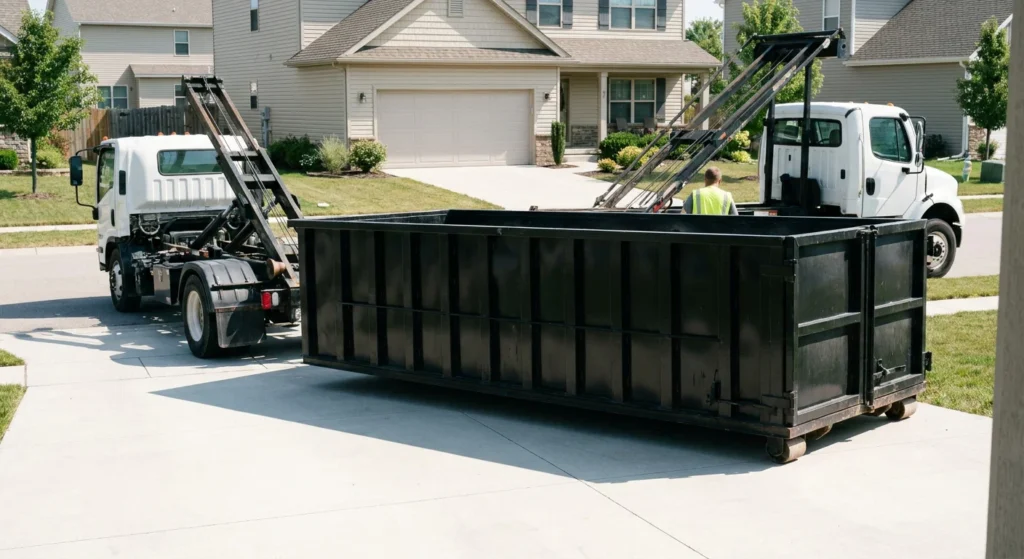
A 40-yard dumpster may be considered for:
- Very large homes
- Heavily furnished estates
- Multiple packed storage spaces
- Large property clear-outs
- Projects expected to generate a high volume of bulky waste
Do not choose a 40-yard container automatically. Availability, placement requirements, material rules, and local weight restrictions may make a different plan more practical.
How to Estimate the Amount of Junk Before You Rent
Start with a complete walk-through of the property. Open closets, check cabinets, inspect storage areas, and include items outside the main living rooms.
Do not estimate the cleanout from the visible floor area alone.
Count Bulky Items First
Write down the number of:
- Sofas and sectionals
- Recliners and armchairs
- Mattresses and box springs
- Bed frames and headboards
- Dressers and wardrobes
- Dining tables and chairs
- Desks and bookcases
- Large rugs
- Outdoor furniture
- Washers and dryers
- Other large appliances
Bulky objects usually determine how quickly the container fills. Even when an item is not extremely heavy, its shape can create unusable gaps.
Inspect Storage Areas Separately
Treat the following areas as separate mini-cleanouts:
- Garage
- Basement
- Attic
- Shed
- Utility room
- Crawl space
- Spare bedroom
- Storage closets
- Porch or deck
- Under-stair storage
These spaces are easy to overlook because the contents are not part of daily living. In many homes, they create a large share of the final waste volume.
Remove Donations Before Estimating Dumpster Space
Separate items into five groups:
- Keep
- Sell
- Donate
- Recycle
- Discard
Estimate dumpster space only after the first four groups are separated. Otherwise, you may pay for capacity that is used by items that could have been reused.
Dumpster Volume and Weight Are Not the Same
A dumpster can run out of physical space before it reaches its weight allowance. It can also reach the allowed weight while visible space remains.
Bulky furniture uses volume quickly. Books, tile, flooring, soil, concrete, and other dense materials use weight quickly.
Most rental arrangements have rules tied to both container capacity and material weight. The included allowance and possible overage charges should be confirmed before delivery.
Do not mix a large amount of heavy renovation debris into a household cleanout without approval. A provider may recommend a separate container, a smaller heavy-debris dumpster, or different pricing terms.
What Can Go in a House Cleanout Dumpster?
Many ordinary household items can go into a residential cleanout dumpster. However, accepted-material rules vary by company, landfill, municipality, and disposal facility.
Always request a written or clearly stated list of accepted and prohibited items before loading.
Items Commonly Accepted
Depending on local rules, commonly accepted household items may include:
- Wooden furniture
- Tables and chairs
- Clothing
- Toys
- Boxes
- Rugs
- Curtains
- Non-hazardous household goods
- Empty cabinets
- Shelving
- General clutter
- Some upholstered furniture
Ask before loading mattresses, appliances, electronics, or upholstered items. Some locations accept them, while others apply an additional fee or require separate disposal.
Items That Need Approval or Separate Disposal
Do not assume the following materials can go into the dumpster:
- Paint
- Solvents
- Pesticides
- Strong household chemicals
- Motor oil
- Fuel
- Batteries
- Propane tanks
- Pressurized cylinders
- Refrigerators and freezers
- Air conditioners
- Tires
- Medical waste
- Asbestos-containing materials
- Liquids
The EPA identifies paints, solvents, oils, cleaners, pesticides, batteries, and compressed-gas tanks as examples of household hazardous waste that may require special handling. It recommends checking with local environmental or solid-waste agencies for approved disposal programs.
Never hide prohibited materials inside boxes or bags. That can create safety problems and may result in rejection or additional charges.
What Affects the Cost of a House Cleanout Dumpster?
The price depends on more than the container’s yard size.
Common cost factors include:
- Dumpster size
- Delivery location
- Local container availability
- Debris type
- Included weight
- Rental period
- Disposal facility charges
- Delivery and pickup distance
- Extra rental days
- Overage weight
- Special-item fees
- Permit requirements
- A container swap or second rental
Published national averages can provide a rough reference, but they are not a reliable project quote. Rental prices and included terms vary by provider and market.
What Should Be Included in the Quote?
Ask whether the price includes:
- Container delivery
- Pickup
- A stated rental period
- A stated weight allowance
- Disposal charges
- Taxes or local fees
- Fuel or delivery charges
Also ask what happens when the project takes longer than planned.
Charges That Can Increase the Final Cost
Possible additional charges include:
- Exceeding the included weight
- Keeping the dumpster beyond the rental period
- Loading restricted items
- Overfilling above the fill line
- Requiring a second trip
- Requesting a container swap
- Blocking the dumpster at pickup
- Cancelling after dispatch
- Placing the container on a public street without approval
The lowest initial quote is not always the least expensive final option. Compare the included weight, rental period, disposal rules, and possible fees.
Prepare the Property Before Dumpster Delivery
Choose the placement area before booking. A driveway is often convenient, but the delivery truck needs a clear approach and enough room to position and remove the container.
Before delivery:
- Move vehicles out of the driveway.
- Open gates.
- Remove low branches when permitted.
- Check for overhead wires.
- Move basketball hoops and portable equipment.
- Mark sprinkler heads or soft ground.
- Ask whether driveway protection is available.
- Keep the area accessible throughout the rental.
- Confirm whether street placement needs local approval.
Do not fill the space around the container with boxes, vehicles, or equipment. The driver must be able to reach the dumpster safely when it is time for pickup.
How to Load One Dumpster Efficiently
Efficient loading can help one container hold more material. The goal is not to force extra debris into the dumpster but to reduce avoidable empty gaps.
Load Flat and Heavy Items First
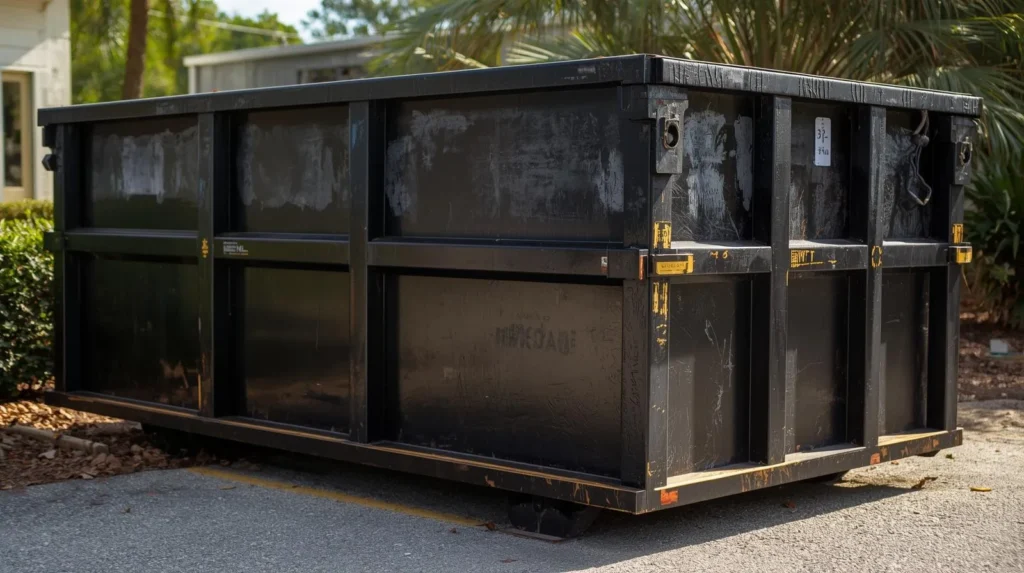
Place flat and stable items near the bottom when practical. Spread weight across the container instead of creating one dense pile.
Do not place all heavy material at one end.
Break Down Bulky Furniture When Practical
Remove safe, detachable parts from:
- Bed frames
- Tables
- Shelving
- Desks
- Cabinets
- Sectional sofas
Do not dismantle anything containing glass, sharp metal, chemicals, or unknown materials unless it can be handled safely.
Fill Gaps With Smaller Household Items
After placing larger objects, use bagged or boxed household items to fill open spaces.
Flatten cardboard boxes whenever possible. Avoid throwing sealed empty boxes into the container because they waste usable capacity.
Keep Everything Below the Fill Line
Nothing should extend above the top edge of the dumpster. Overfilled containers can be unsafe to transport and may not be collected until the excess is removed.
Do not climb onto loose debris to push it down. Use the walk-in door when the container has one, and close it securely before loading over the side.
Dumpster Rental, Junk Removal, or Dump Runs: Which Makes Sense?
A residential dumpster rental works well when you want to load gradually, have people available to do the work, and need one central place for household waste.
Full-service junk removal may be better when:
- You cannot perform the lifting.
- The house must be cleared quickly.
- Only a few bulky items need removal.
- There is no legal or practical place for a dumpster.
- A crew is needed to carry items out of the home.
Repeated dump runs may appear cheaper, but they require a suitable vehicle, lifting, fuel, travel time, unloading, and disposal arrangements. Curbside bulk pickup may work for a small number of approved items, but quantity and scheduling rules may limit its value for a full cleanout.
Choose the method based on labor, volume, placement space, timing, and material restrictions—not only the advertised starting price.
Cleanouts That Need Extra Planning
Some whole-house projects require more planning than an ordinary decluttering job.
Estate Cleanouts
Estate cleanouts may include decades of furniture, documents, personal belongings, garage items, and stored household products.
Sort important papers, photographs, valuables, medications, and hazardous materials before general loading begins. When the full volume is uncertain, ask about a larger container or a planned swap.
Moving and Downsizing
A moving cleanout is easier to estimate because the homeowner usually knows which items are going to the new property.
Complete the keep, sell, and donate decisions before delivery. This prevents useful items from being buried under discarded material.
Foreclosure or Eviction Cleanouts
These properties may contain abandoned furniture, food, chemicals, damaged appliances, and unknown materials.
Inspect the property before selecting a container. Do not load unidentified liquids, pressurized tanks, medical waste, or potentially hazardous products.
Heavily Cluttered or Hoarding Properties
Severe clutter may involve structural hazards, pests, mold, sharp objects, biohazards, or blocked exits.
A standard self-service dumpster may not be enough. Professional cleanup, safety equipment, specialized waste handling, or several container exchanges may be required.
Cleanouts With Renovation Debris
Household junk and renovation waste can have very different weight profiles.
Drywall, flooring, cabinets, tile, wood, and fixtures may be accepted in some containers. Concrete, brick, soil, shingles, and other dense materials may require separate arrangements.
Tell the rental provider about every major material before ordering.