

A concrete dumpster rental can simplify a patio, sidewalk, driveway, or demolition cleanup. However, concrete cannot be loaded like household junk because a small amount can weigh several tons.
The container may still look nearly empty when it reaches its allowed weight. Before delivery, you need to estimate the concrete, confirm the accepted materials, and understand exactly how high the provider allows you to load.
Quick Answer
A concrete dumpster rental should be selected by weight capacity, not only by cubic-yard volume. A 10-yard heavy-debris container is commonly recommended, but the correct option depends on the provider’s included tonnage, maximum load, accepted materials, and fill line.
Estimate your concrete before ordering. Keep it separate from wood, trash, drywall, soil, and other debris unless the provider approves a mixed load.
At a Glance
- Concrete weighs about 4,000 pounds, or roughly two tons, per cubic yard.
- A dumpster can reach its weight limit long before it looks full.
- A 10-yard container is commonly used for concrete and masonry debris.
- Clean concrete may be priced or processed differently from mixed debris.
- Rebar, wire mesh, asphalt, brick, block, soil, and wet concrete require advance approval.
- Keep concrete below the provider’s heavy-material fill line.
- Confirm the included tonnage and overage rate in writing before delivery.
Concrete weight and rental rules vary by mix, moisture, provider, container, and disposal facility. Use all calculations in this guide as planning estimates rather than
Why a Concrete Dumpster Rental Is Different
Most people choose a dumpster by imagining how much space their debris will occupy. That approach works reasonably well for furniture, cardboard, wood, and other bulky but lighter materials.
Concrete changes the calculation. With dense debris, the truck’s lifting and hauling limits may become the deciding factor before the container’s volume is used.
Concrete Is Limited by Weight Before Space
One cubic yard of concrete weighs approximately 4,000 pounds. That means a relatively small pile can use several tons of a rental’s weight allowance.
A 10-yard container has room for ten cubic yards by volume, but that does not mean it can safely carry ten cubic yards of concrete. Ten cubic yards could approach 20 tons before accounting for the container itself.
A Larger Dumpster Is Not Always the Safer Choice
A 20-, 30-, or 40-yard dumpster may offer more visible space, but that extra space can encourage overloading. The truck may be unable to lift or legally transport the container.
For concrete, a lower-sided container is often easier to load and control. Larger projects may require multiple 10-yard containers, scheduled swaps, or several pickups instead of
How Much Does Concrete Weigh?
For early planning, use approximately 4,000 pounds per cubic yard. This equals about two tons.
Actual weight can change with the concrete mix, moisture, embedded steel, attached soil, coatings, and the amount of empty space between irregular pieces. Your provider’s scale ticket, not the visual level of the dumpster, normally determines the final disposal weight.
Concrete Weight Planning Table
Concrete Volume | Approximate Weight |
0.5 cubic yard | 1 ton |
1 cubic yard | 2 tons |
1.5 cubic yards | 3 tons |
2 cubic yards | 4 tons |
2.5 cubic yards | 5 tons |
3 cubic yards | 6 tons |
4 cubic yards | 8 tons |
5 cubic yards | 10 tons |
These figures are estimates. They should help you discuss container options, but they should not replace the provider’s written weight limit.
Common Slab Examples
Project Area | Thickness | Approximate Volume | Estimated Weight |
10 × 10 feet | 4 inches | 1.23 cubic yards | 2.5 tons |
10 × 20 feet | 4 inches | 2.47 cubic yards | 4.9 tons |
12 × 20 feet | 4 inches | 2.96 cubic yards | 5.9 tons |
20 × 20 feet | 4 inches | 4.94 cubic yards | 9.9 tons |
A modest 10-by-10-foot patio may already produce more than two tons of concrete. A standard two-car driveway can require several hauls, depending on its area, thickness, and reinforcement.
Why Broken Pieces Do Not Make Concrete Light
Breaking a slab into smaller pieces makes the debris easier to move and may improve how evenly it sits in the container. It does not remove the underlying weight.
Smaller pieces may pack more tightly and reduce the empty spaces between chunks. As a result, a well-packed load can become heavier than expected even though it looks neat and remains below the top rail.
What Size Dumpster Should You Use for Concrete?
A 10-yard dumpster is commonly recommended for concrete, brick, block, asphalt, and other dense materials. Its lower walls make loading easier, while its smaller volume helps limit accidental overloading.
That recommendation is not universal. Some providers offer special low-boy containers, 12-yard heavy-debris bins, or 15- and 20-yard containers with strict partial-fill rules.
Why 10-Yard Dumpsters Are Commonly Recommended
A 10-yard dumpster may be suitable for:
- Small patio removal.
- Sidewalk replacement.
- Concrete steps.
- Pavers and blocks.
- Small sections of a driveway.
- Landscaping walls.
- Limited masonry demolition.
The important number is not simply “10 yards.” Ask how many tons are included and what maximum weight the truck can pick up.
When Multiple Containers or Swaps May Be Needed
A large driveway, foundation, parking area, or commercial slab can create far more concrete than one container can safely carry. You may need to schedule several containers or request an empty-and-return service.
Plan the swaps before demolition begins. A full container left in the loading area can stop work, block equipment, or cause workers to pile debris in unsafe locations.
Why Provider Limits Matter More Than Advertised Volume
Two companies may offer containers with the same dimensions but different included tonnage. One quote may include two tons, while another may include substantially more.
Compare the complete rental terms:
- Container dimensions.
- Included tonnage.
- Maximum accepted weight.
- Overage rate.
- Material restrictions.
- Rental period.
- Delivery and pickup charges.
- Trip or dry-run fees.
A roll-off dumpster rental should be chosen only after the provider knows you are disposing of concrete. Ordering a general construction container without identifying the waste can result in changed pricing or refused service.
How to Calculate Your Concrete Load Before Ordering
You do not need an engineering background to create a useful estimate. You need the slab’s length, width, and approximate thickness.
Step 1 — Measure Length and Width
Measure the concrete area in feet. For irregular areas, divide the surface into rectangles and calculate each section separately.
For example, a walkway may contain one 3-by-20-foot section and another 3-by-10-foot section. Calculate both sections and add the results.
Step 2 — Convert Thickness to Feet
Concrete thickness is usually measured in inches, but the volume formula requires feet.
Use these common conversions:
Thickness | Thickness in Feet |
3 inches | 0.25 feet |
4 inches | 0.333 feet |
5 inches | 0.417 feet |
6 inches | 0.5 feet |
8 inches | 0.667 feet |
Do not guess that an entire slab has the same thickness. Driveway edges, footings, steps, and foundations may be much thicker than the visible surface.
Step 3 — Calculate Cubic Yards
Use this formula:
Length in feet × width in feet × thickness in feet ÷ 27 = cubic yards
For a 10-by-10-foot slab that is four inches thick:
10 × 10 × 0.333 ÷ 27 = approximately 1.23 cubic yards
Step 4 — Convert Cubic Yards to Estimated Tons
For a general planning estimate:
Cubic yards × 2 = estimated tons
The 1.23-cubic-yard slab would weigh approximately:
1.23 × 2 = 2.46 tons
Round upward when discussing the project with a provider. It is safer to plan for slightly more weight than to rely on a best-case estimate.
What Can Go in a Concrete Dumpster?
Material rules vary widely. Never assume that a container advertised for concrete will accept every material found in or around the slab.
Tell the provider exactly what will be loaded. A photograph of the broken material may help the provider identify rebar, mesh, soil, asphalt, coatings, or mixed construction waste.
Clean Concrete
Clean concrete generally means concrete that is separated from:
- Household trash.
- Yard waste.
- Wet cement.
- Hazardous material.
Some providers also require clean loads to be free of rebar and wire mesh. Others accept reinforced concrete but use a different rate or facility.
Concrete With Rebar or Wire Mesh
Do not assume that embedded steel is accepted. Long pieces of exposed rebar can create handling hazards, damage equipment, or prevent safe covering and transport.
Ask whether rebar must be cut flush, separated, bundled, or placed in a different container. Never leave steel projecting above the dumpster wall.
Brick, Block, Asphalt, Dirt, and Other Heavy Materials
A provider may accept brick, block, pavers, asphalt, tile, rock, gravel, and soil as heavy debris. That does not mean all those materials can be mixed in one load.
Clean concrete may be taken to one recycling facility, while soil or mixed construction debris may need a different destination. Mixing them can change the price or make the load unsuitable for recycling.
Wet Concrete, Slurry, and Contaminated Material
Wet concrete and concrete slurry are generally not accepted in a standard roll-off dumpster. They can leak, harden inside the container, create excess weight, and cause environmental or handling problems.
Painted, chemically treated, oily, or otherwise contaminated concrete also requires advance review. Describe any coating, adhesive, fuel contamination, or unknown
How to Load Concrete Into a Dumpster Safely
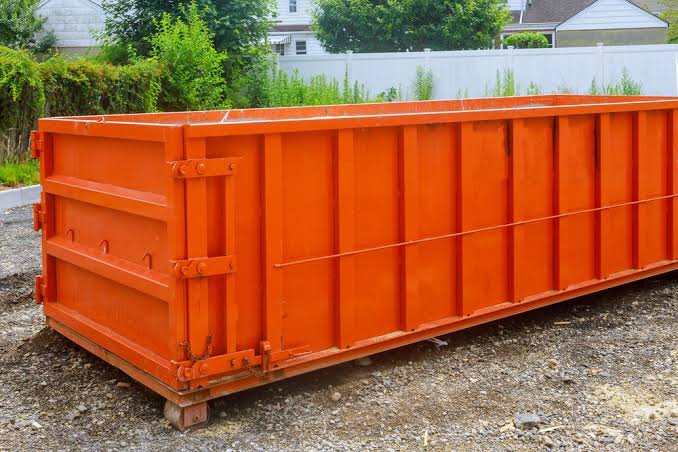
Loading concrete is not a race to fill every visible space. Your goal is to maintain safe access, distribute the weight, and stop at the provider’s approved limit.
Use the Loading Door When Available
Open the dumpster door before loading begins and secure it as instructed. A loading door allows workers to carry or wheel smaller pieces into the container without lifting them over a high wall.
Do not climb on the side rails or stand on an unstable debris pile. Close and latch the door according to the provider’s instructions before pickup.
Spread the Weight Across the Container Floor
Place concrete across the floor instead of building one tall pile at the front or back. Uneven loading can affect lifting, transport, and container stability.
Load in controlled layers. Do not drop large chunks from excessive height because they can damage the container floor or cause debris to bounce outside the loading zone.
Keep the Load Below the Provider’s Fill Line
The top rail is not always the correct fill limit for concrete. Some heavy-debris containers have a lower line that shows how high dense material may be loaded.
Follow the lower limit even when plenty of space remains above it. Material must not project from the sides or prevent the container from being safely covered.
Stop Before the Dumpster Looks Full
A concrete dumpster may reach its weight allowance at one-quarter, one-third, or one-half of its visible volume. The correct stopping point depends on the estimated weight and provider instructions.
Keep a running estimate as sections of the slab are removed. Stop and call the provider when the load approaches the planned tonnage.
How Concrete Dumpster Pricing and Overage Fees Work
A low advertised rental price does not always mean a low final bill. Concrete pricing depends heavily on weight, material type, hauling distance, and disposal destination.
Base Rental Price
The base price may cover:
- Container delivery.
- A stated rental period.
- A set amount of weight.
- Disposal or recycling.
- Basic taxes and fees.
Ask for an itemized quote. Confirm whether fuel, environmental, administrative, or local fees are included.
Included Weight Allowance
The included weight is the amount covered by the base rental price. It is not necessarily the maximum amount the container can physically hold.
For example, a rental may include three tons but permit a higher maximum load. The additional weight may be billed at a per-ton overage rate.
Per-Ton Overage Charges
When the container reaches the disposal or recycling facility, the load may be weighed. If the debris exceeds the included allowance, the extra amount is normally billed according to the rental agreement.
Ask:
- What weight is included?
- What is the rate per additional ton?
- Is the charge prorated?
- Can I receive a weight ticket?
- Is there a maximum accepted load?
Overage rates vary by market and provider. Hometown Dumpster Rental explains that loads are commonly weighed before and after unloading, with the difference used to calct.
Contamination, Dry-Run, and Extra-Rental Fees
Additional charges may apply when:
- Unapproved debris is mixed with concrete.
- The container is loaded above the approved line.
- The driver cannot reach the dumpster.
- Material must be removed before hauling.
- The rental period is extended.
- A second trip is required.
- The container is damaged.
- The load cannot be taken to the expected recycling facility.
Ask the provider to explain these charges before delivery. A transparent quote should identify the situations that can change the final price.
Prepare the Placement Area Before Delivery
Concrete makes the loaded container extremely heavy. Placement should be planned for both the arriving truck and the fully loaded pickup.
Choose a Firm, Level Surface
A paved driveway or other stable surface is usually preferable to a lawn or soft soil. A heavy container can sink, shift, or damage underground features.
Tell the provider about slopes, cracks, septic systems, drainage structures, low branches, overhead wires, gates, and narrow access points.
Protect the Driveway When Appropriate
Ask whether boards or another protective method should be placed beneath the container. Protection can reduce direct metal contact, but it cannot guarantee that an older, thin, cracked, or weak driveway will remain undamaged.
The truck also needs room to roll the container into position. Do not place boards without following the hauler’s instructions.
Keep Delivery and Pickup Access Clear
The truck needs a clear approach, overhead clearance, and room to operate. Move vehicles, trailers, tools, and loose materials before the scheduled service window.
Keep the access route clear throughout the rental. A driver may refuse pickup if the container is blocked or unsafe to reach.
Check Permit Requirements for Public Property
A dumpster placed entirely on private property may not require a permit in many locations. Placement on a street, sidewalk, or other public right-of-way commonly requires local approval.
Rules vary by municipality. For example, New York City requires an appropriate DOT permit for a commercial refuse or construction-debris container placed on a
Confirm who obtains the permit. In some jurisdictions, it must be secured by the carting company or contractor rather than the property owner.
Concrete Demolition and Loading Safety
Concrete removal exposes people to sharp edges, heavy pieces, unstable rubble, noise, dust, and moving equipment. Consider hiring a qualified contractor when the slab is thick, reinforced, structural, elevated, or difficult to access.
Control Dust During Cutting or Breaking
Cutting, drilling, grinding, crushing, and jackhammering concrete can generate respirable crystalline silica. OSHA warns that these small particles can travel deep into the lungs an
Use appropriate dust-control methods and follow applicable workplace-safety requirements. Applying water at the cutting point can substantially reduce dust during certain concrete-cutting operations, but the correct control depends on
Wear Task-Appropriate Protective Equipment
The equipment required may include:
- Eye protection.
- Hearing protection.
- Heavy work gloves.
- Protective footwear.
- Suitable respiratory protection.
- High-visibility clothing.
- Head protection.
Protective equipment does not replace training, dust controls, safe lifting, or proper tool use. Contractors and employers must follow the safety standards that apply to their work.
Keep People Away From the Loading Zone
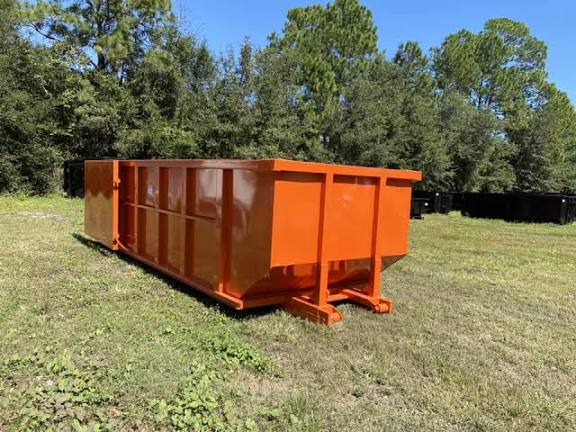
Establish a clear route between the demolition area and dumpster. Keep children, customers, residents, and unneeded workers away from falling debris and moving equipment.
Do not throw concrete when another person is inside or beside the container. Use controlled loading methods and communicate before equipment moves.
Can Concrete Be Recycled?
Concrete is often recoverable when it is separated from unsuitable materials. Recycling facilities may crush it for road base, backfill, aggregate, or other construction uses.
The US Environmental Protection Agency identifies concrete as a major construction and demolition material and notes that local recycling markets may exist for concrete, as
Why Clean Loads Are Easier to Recycle
A clean load is easier to direct to an appropriate processing facility. Dirt, trash, wood, drywall, hazardous coatings, and other contamination can reduce recycling options.
Rebar policies differ. Some facilities can separate metal during crushing, while others require the steel to be removed beforehand.
Ask Where the Material Will Be Taken
Before ordering, ask:
- Is the concrete recycled or landfilled?
- Is a concrete-only rate available?
- Is rebar accepted?
- Can brick or asphalt be mixed?
- Is documentation available for commercial projects?
- What contamination causes the load to be rejected?
Do not assume that “recyclable” means the provider accepts every type of reinforced or coated concrete.
When Is It the Right Time to Rent a Dumpster?
Dumpster rental is most useful when the debris is too heavy or extensive for ordinary waste collection. It also reduces the need to load, unload, and transport the same concrete several times.
Small Concrete Repairs
A few small pavers or broken pieces may fit into an approved self-haul load. However, ordinary curbside bins are rarely suitable for dense construction debris.
Check local collection rules before placing any concrete at the curb. Even a small quantity can damage a household bin or exceed its lifting allowance.
Patio, Sidewalk, and Driveway Removal
A dumpster is often practical when the project will generate one or more cubic yards of concrete. It allows debris to be contained near the work area while the demolition continues.
Compare the rental with the cost and effort of:
- Repeated dump trips.
- Vehicle or trailer rental.
- Disposal fees.
- Loading and unloading time.
- Personal injury and vehicle-damage risk.
Larger Demolition Projects
Foundation, commercial slab, parking area, and structural demolition projects may require heavy equipment, multiple containers, and scheduled swaps. These are not ordinary household cleanups.
A provider should know the project schedule and expected tonnage before the first container arrives. A qualified demolition contractor may be more appropriate when the concrete is reinforced, structural, or connected to utilities.
A heavy debris dumpster service becomes the better option when the project will produce more dense material than you can safely self-haul, when repeated dump runs would interrupt the work, or when the debris must remain contained on the site.
Questions to Ask Before Booking
Use this checklist when requesting a quote:
- Do you accept concrete from my type of project?
- What container do you recommend?
- How many tons are included?
- What is the maximum load?
- Where is the concrete fill line?
- What is the overage charge per ton?
- Is the charge prorated?
- Do you accept rebar or wire mesh?
- Can brick, block, asphalt, dirt, or gravel be mixed?
- Is wet concrete or slurry prohibited?
- Is a clean concrete rate available?
- Are delivery and pickup included?
- How long is the rental period?
- What is the daily extension rate?
- What causes a dry-run or rejected-pickup fee?
- Who handles street permits?
- How much access does the truck require?
- Can I receive the final weight ticket?
Provide the project measurements while requesting the quote. Mention the slab thickness, reinforcement, access limitations, and every material that may enter the container.